A breaker that keeps tripping is more than an annoyance. It’s your home telling you something isn’t right, and the fix isn’t always as simple as flipping the switch back on.
Most of the time, the cause is something ordinary. You might have too many things plugged into one circuit, or a worn-out appliance drawing more power than it should. Other times, the problem is less obvious, like damaged wiring or a breaker that’s simply reached the end of its life.
Either way, the breaker is just doing its job. It shuts off to keep your home safe. But if it keeps happening, don’t just keep resetting it. Track down the cause to avoid bigger electrical problems later. You may be wondering why does my circuit breaker keep tripping. Let’s break down why, what to do when it happens, warning signs, troubleshooting process, and prevention methods.

Why Does My Circuit Breaker Keep Tripping?
Your circuit breaker is basically your home’s electrical safety guard. It monitors electricity flowing through individual circuits. When something goes wrong, it cuts the power. This helps prevent overheating, equipment damage, and electrical hazards.
But several problems can trigger that protective response. Let’s look at the most common culprits:
⏹ Overloaded Circuit
An overloaded circuit happens when demand exceeds its safe capacity. Too many appliances can push one circuit beyond its limits. Think kettles, microwaves, heaters, and washing machines running together. Each appliance draws electricity from the same supply. Eventually, the circuit breaker detects excessive current. It trips before the wiring becomes dangerously hot.
This often happens in busy kitchens and utility rooms. Moving appliances between suitable circuits may reduce the load. But persistent overloading needs a proper electrical assessment.
⏹ Short Circuit
A short circuit happens when electrical conductors connect incorrectly. Live and neutral wires may touch through damaged insulation. This creates a sudden, unusually high electrical current. The circuit breaker reacts by disconnecting the supply.
You might notice a loud pop or sparks. Sometimes, a burning smell accompanies the sudden power loss. Damaged cable insulation, crushed wires, and faulty appliances can cause short circuits. Leave the affected circuit switched off and hire a qualified electrician to investigate the underlying fault.
⏹ Faulty Electrical Appliances
Sometimes, the culprit isn’t inside your walls. A faulty appliance can trigger your circuit breaker. Damaged internal components may create excessive current or leakage. Kettles, washing machines, and dishwashers deserve particular attention.
Notice when the tripping happens. Does it occur after switching on your washing machine? Does the kitchen lose power when using your kettle? These patterns can help identify the offending appliance.
Stop using any appliance suspected of being faulty. Don’t repeatedly reconnect it to test the problem. Arrange appropriate repair or replacement instead.
⏹ Earth Leakage or Moisture Problems
Electricity should follow its intended path through your circuits. Sometimes, current escapes towards earth through another route. This is called earth leakage.
Damaged insulation can allow unwanted electrical leakage. Water entering outdoor sockets can create similar problems. Leaking appliances and damp electrical fittings deserve attention. Your RCD may detect this imbalance and trip.
An RCD protects against dangerous electrical leakage. If your RCD keeps tripping, don’t ignore it. Electrical Safety First recommends professional investigation for recurring faults.
⏹ Damaged or Loose Electrical Wiring
Your home’s wiring carries electricity throughout every room. Damaged insulation can expose conductors to unwanted contact. Loose connections can also create dangerous electrical conditions.
Ageing cables, previous damage, and poor installations contribute. You might notice intermittent power or unusual buzzing. Sometimes, the breaker trips without an obvious pattern.
These problems can remain hidden behind walls. Don’t remove sockets or investigate internal wiring yourself. Arrange a professional inspection before the fault worsens.
⏹ A Faulty Circuit Breaker
Circuit breakers can develop faults as components deteriorate. Internal mechanisms may become damaged or unreliable. Sometimes, a breaker trips without an obvious circuit fault.
An electrician can test its operation and condition. They can determine if replacement is necessary. A faulty device may require a professional circuit breaker replacement. Sometimes, a wider fuse box replacement may also be needed.
Never replace a breaker with a higher-rated alternative. Its rating must match the circuit’s protective requirements.
What To Do When Your Circuit Breaker Keeps Tripping?
A tripped breaker can interrupt your entire evening. Your lights disappear, appliances stop, and everything goes quiet. But rushing to restore power isn’t the answer. Start by checking the situation from a safe distance. Here’s what you can do in the first place:
✔ Check for Signs of Electrical Damage
Look for burning smells, scorch marks, or unusual noises. Also watch for smoke, visible damage, or nearby moisture. These signs could point to a more serious electrical fault.
If you notice any of them, don’t touch the equipment. Keep away and arrange urgent professional assistance. If there’s a fire, leave immediately and call 999.
✔ Think About What Caused the Trip
If everything looks normal, think about what happened beforehand. Were several high-powered appliances running together? Did the power go off after switching something on? These details can help narrow down the possible cause.
✔ Disconnect Appliances Safely
If there’s no sign of danger, unplug accessible portable appliances. Only handle plugs and cables that appear undamaged and dry. Leave hardwired appliances and fixed electrical fittings alone.
✔ Try One Careful Reset
If everything appears safe, you can attempt one reset. Follow the manufacturer’s instructions for operating the breaker. Usually, you’ll need to switch it fully off first.
If it trips again, leave it switched off. Don’t keep resetting it throughout the day. Contact a qualified electrician.
✔ Get Professional Help for Recurring Trips
Repeated tripping usually means something needs attention. The cause could involve damaged wiring or faulty appliances. A defective protective device might also be responsible.
What Are the Warning Signs of a Faulty Circuit Breaker?
Circuit breakers rarely give you a helpful explanation. Instead, your home may offer a few clues. Some signs are subtle, while others demand urgent attention. Common signs include:
◻ Frequent and Unexpected Tripping
A breaker that trips repeatedly needs investigating. It might indicate an overload or electrical fault. A damaged breaker could also be responsible.
Don’t dismiss repeated trips as a minor inconvenience. Your electrical protection system is detecting something unusual.
◻ Buzzing, Crackling or Popping Sounds
Electrical equipment should operate without unusual noises. Buzzing and crackling can indicate loose connections or arcing. These faults can create serious overheating and fire risks.
Stop using the affected circuit where safe. Contact an electrician promptly for a professional inspection.
◻ Burning Smells or Scorch Marks
A burning smell around your fuse box deserves immediate attention. Dark marks can indicate overheating or electrical damage. Never touch or open the affected equipment.
◻ Unusual Heat Around the Consumer Unit
Your consumer unit shouldn’t become unusually hot. Excessive heat may indicate a dangerous electrical fault. Never touch equipment that appears damaged or overheated.
◻ Intermittent Power or Flickering Lights
Lights that repeatedly flicker deserve proper investigation. You might also experience unexpected power interruptions. Loose connections and damaged wiring can cause these symptoms.
Note: These signs can also point to problems with the wiring, loose connections, or other electrical components, rather than the circuit breaker itself. So it’s better to seek professional help and have your electrical system inspected.
How to Troubleshoot a Circuit Breaker Safely?
You can make a few basic observations yourself. But electrical troubleshooting has some important boundaries. Never remove covers or expose internal wiring. Let’s take a look at how you may troubleshoot your circuit breaker safely:
✔ Identify Which Switch Has Tripped
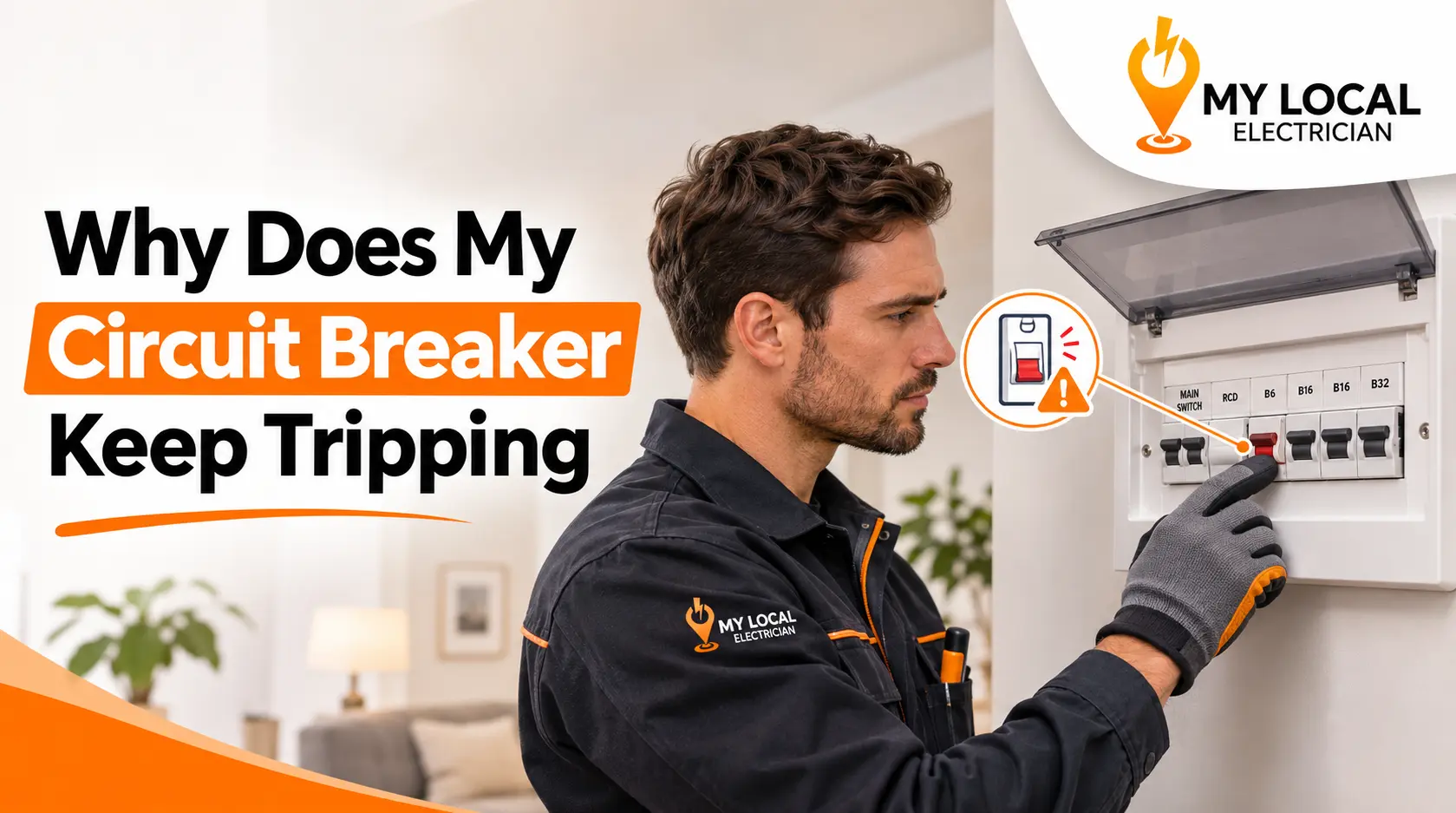
Start by looking at your consumer unit. Different protective devices respond to different electrical problems. An MCB protects a circuit against excessive current. An RCD detects certain types of electrical leakage. An RCBO combines both protective functions in one device.
Check which switch has moved into its tripped position. Its label may help identify the affected circuit. Never remove the consumer unit cover to investigate further.
✔ Look for Patterns in the Tripping
Pay attention to when the breaker switches off. Does it happen when a particular appliance starts? Does it occur during busy periods around your home?
These patterns can help narrow down possible causes. For example, several powerful appliances may overload one circuit. A faulty appliance could also trigger the protective device.
Note down when the tripping happens and what was running. This information can help your electrician investigate the problem.
✔ Consider Possible Appliance Faults
Think about appliances connected to the affected circuit. Washing machines, kettles, and heaters can develop electrical faults. Damaged cables or internal components may trigger tripping.
Stop using any appliance you suspect is faulty. Don’t repeatedly reconnect it to reproduce the problem. Leave repairs and electrical testing to a qualified professional.
✔ Arrange Professional Electrical Testing
Some electrical faults remain hidden from everyday observation. An electrician can carry out appropriate tests. They’ll check wiring, connections, and protective devices.
Depending on their findings, repairs may involve several components. You might need circuit breaker replacement or wiring repairs. A wider consumer unit replacement may also be appropriate. The electrician can recommend the safest solution after testing.
How To Prevent Your Circuit Breaker From Tripping?
You cannot prevent every electrical fault from happening. But sensible electrical habits reduce avoidable problems. A little attention goes a surprisingly long way. Common ways to keep a circuit breaker from frequent tripping are:
☑ Avoid Overloading Electrical Circuits
Pay attention to how many appliances operate together. High-powered appliances can place considerable demand on circuits. Avoid connecting too many appliances through extension leads.
Never assume another socket uses a different circuit. Ask an electrician if you’re unsure about circuit arrangements.
☑ Maintain Your Electrical Appliances
Damaged appliances can cause repeated electrical problems. Check plugs, cables, and accessible connections for damage. Stop using equipment with scorch marks or unusual heat. Arrange professional repairs for suspected electrical faults.
☑ Keep Electrical Equipment Dry
Water and electricity make a particularly dangerous combination. Protect outdoor sockets from rain and moisture. Address plumbing leaks before water reaches electrical fittings. Never touch wet electrical equipment or consumer units.
☑ Arrange Periodic Electrical Inspections
Electrical installations can deteriorate as properties get older. Insulation, connections, and protective devices need attention. A professional inspection can identify developing problems early.
An Electrical Installation Condition Report assesses installation safety. An electrician can recommend suitable inspection intervals.
☑ Consider Older Wiring and Fuseboxes
Older electrical installations may struggle with modern household demands. New appliances can increase the load on existing circuits. Damaged or outdated wiring may also need attention.
Consider house rewiring if testing identifies major problems. Your electrician can recommend the appropriate solution.
Final Thoughts
A circuit breaker that keeps tripping needs attention. Sometimes, the cause is a simple appliance fault. Other times, damaged wiring hides behind the walls. Don’t sit at home wondering why does my circuit breaker keep tripping and resetting it without understanding the problem.
Your breaker is protecting something important. Listen to unusual smells, noises, and repeated interruptions. Count them in. If the problem continues, ask for professional electrical assistance.
Frequently Asked Questions About Circuit Breaker Tripping
Why Does My Circuit Breaker Keep Tripping With Nothing Plugged In?
A breaker can trip without portable appliances connected. Damaged wiring or faulty fixed appliances may cause problems. Moisture and deteriorating insulation can also trigger trips.
Can A Faulty Appliance Cause A Circuit Breaker To Trip?
Yes, a faulty appliance can cause repeated tripping. Damaged components may create excessive current or leakage. Washing machines, kettles, and dishwashers are common examples.
How Many Times Can I Reset A Tripped Circuit Breaker?
There’s no safe universal number of repeated resets. First, identify and address the underlying problem. One cautious reset may be reasonable without warning signs. If it trips again, leave it switched off.
Why Does My Circuit Breaker Trip At Night?
Heating systems or timed appliances may trigger faults at night. Refrigerators and freezers also operate overnight. Moisture or deteriorating wiring can cause intermittent problems. An electrician can investigate recurring overnight interruptions.
Can A Circuit Breaker Go Bad?
Yes, circuit breakers can develop internal mechanical faults. Their components may deteriorate through age or damage. A damaged breaker might trip unpredictably. Professional testing can establish if replacement is necessary.
Is It Dangerous If My Circuit Breaker Keeps Tripping?
Repeated tripping can indicate potentially dangerous electrical faults. Overheating, damaged wiring, and earth leakage deserve attention. Burning smells and crackling sounds may also increase the concern.
Should I Replace A Circuit Breaker That Keeps Tripping?
Not necessarily, because replacement might not solve the problem. Have an electrician identify the cause first. They’ll determine if circuit breaker replacement is appropriate.