
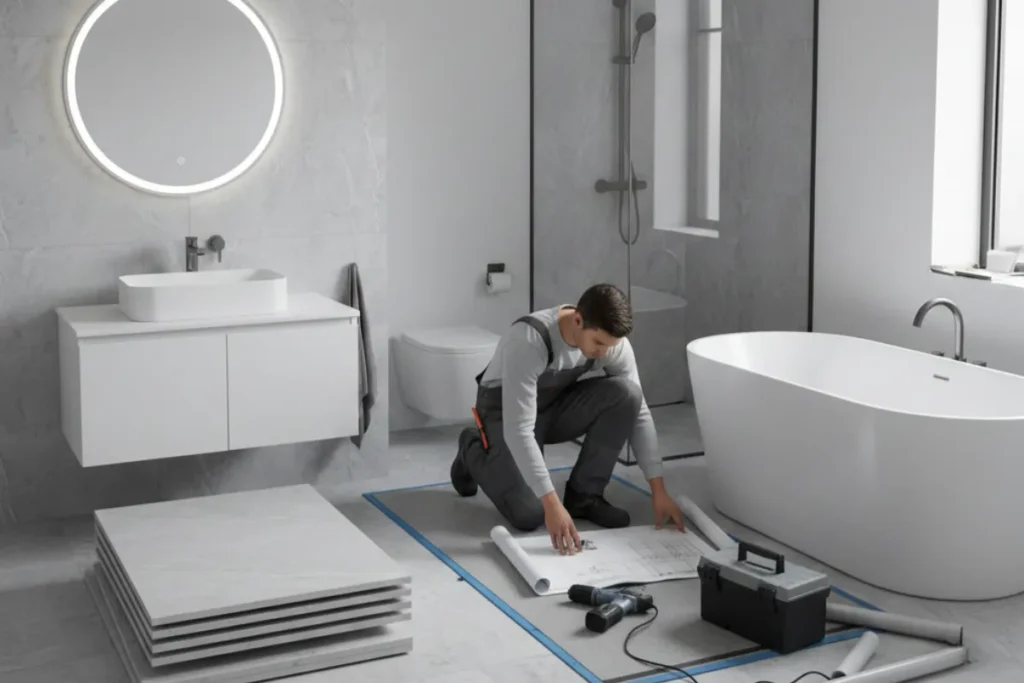
A new bathroom is a collaboration of endless dreaming, planning, and moving forward to the final execution. It’s not just about looks; it’s about functionality, comfort, and adding value to the home.
Before you hire a professional for bathroom installation or an interior designer, understanding the cost is essential. So how much does a new bathroom cost? That isn’t straightforward. Bathroom pricing can depend on several factors.
Today we’ll walk you through a detailed pricing breakdown for a new bathroom installation, factors that influence the costs, and expert tips that might help. Ready to explore? Let’s get started.
How much does a new bathroom cost? A complete guide for 2026
A new bathroom typically costs £4500 to £11000 on average. For a full mid-range renovation, most UK homeowners end up spending between £6500 and £8000.
Here’s a complete breakdown of a new bathroom installation cost in the UK:
◆ New bathroom installation cost by bathroom type
| Bathroom Type | Cost(National Average in the UK) | Cost (London and South East) |
| Small/Basic Bathroom | £2000-£4500 | £6000-£9500 |
| Mid-range/Standard Bathroom | £4500-£9000 | £10,000-£15,000 |
| Bespoke/Premium/Customised/Luxury Bathroom | £10,000-£20,000+ | £17,000-£30,000+ |
◆ Typical average installation cost
| Job type | Approximate Cost Range (labour only) |
| Ripping Out and Disposal of Old Bathroom | £600-£1000 |
| Installing or rerouting pipes under walls or the ceiling | £1500-£3000 |
| Electrical Work | £500-£900 |
| Tiling Work | £1200-£2800 |
| Plastering Job | £400-£700 |
| Fixture Installation | £600-£1500 |
| Additional Extras | £300-£700 |
◆ New bathroom materials and fixtures costs
| Material/Fixture Name | Basic/Budget Range | Standard/Mid Range | Premium Range |
| Taps/Brassware | £50-£150 | £150-£400 | £400-£800+ |
| Toilet | £100-£300 | £300-£500 | £500-£1500+ |
| Basin and Vanity | £150-£400 | £400-£600 | £600-£2000+ |
| Bath or Shower | £200-£400 | £400-£900 | £1000-£5000+ |
| Tiles/Wall Panels | £10-£20/m² | £25-£50/m² | £50-£150+/m² |
| Floooring | £10-£40/m² | £20-£50/m² | £50-£150+/m² |
| Lighting and Electrical Equipments | £100-£300 | £300-£800 | £800-£1500+ |
| Heating | £100-£300 | £300-£500 | £1000-£3000 |
| Accessories(Painting, decoratives,etc) | £100-£300 | £200-£500 | £500-£2000+ |
◆ Labour cost by region
Labour cost is accountable for 45-60% of the total budget for a new bathroom installation. Here’s the average labour cost by UK regions:
| Region Name | Average Labour Cost Per Day |
| London and South East | £300-£350 |
| Midlands and South West | £200-£275 |
| Northern England | £180-£220 |
◆ Labour costs per project/day
| Labour Type | Approximate Cost |
| Layout changes/rerouting pipework | £500-£1500 per project |
| Fixture Fitting | £180-£350 per day |
| Plumbing work | £250-£500 per day |
| Tiling job | £150-£250 per day£20-£40 per m² |
| Electrical Work | £150-£500 per project |
What are the cost-driving factors for a new bathroom?
A new bathroom installation can vary widely in price, and a bunch of factors can push those costs up. Here’s a quick rundown of what typically influences the final price:
✔ Property condition
Older homes can be full of surprises like water damage, rot, mould, outdated wiring, or old plumbing that can quickly turn into unexpected expenses. Fixing up an older place might mean more labour and repairs, which can drain your budget.
On the flip side, new builds usually don’t have these issues, so you save money and avoid those headache-inducing surprises right from the start.
✔ Materials and fixtures
Upgrading to high-end materials like natural stone tiles or luxurious fixtures will significantly increase your budget compared to standard porcelain tiles and basic basins.
Features such as LED lighting, wall-hung toilets, freestanding baths, or digital showers not only elevate the style but also require specialised installation, which bumps up the price.
✔ Type of tradespeople needed
Planning a renovation that involves electricians, plumbers, tilers, and plasterers? Expect the labour costs to go up. The smart move? Opt for a company like My Local Electrician that offers multiple trades at once.
They handle various trades in a single package, cutting down on scheduling headaches and saving you a ton of cash. Less hassle, more savings.
✔ Geographical location
Where you are in the UK makes a big difference to labour costs for bathroom installations. London’s high living costs and busy market push prices up, often making it more expensive than smaller towns or countryside areas.
Being aware of these regional price gaps means you can plan your project more wisely and keep costs in check.
✔ Size of the property
A larger bathroom requires more materials and more labour, which naturally bumps up the overall cost. It’s basic math—more space equals higher expenses. So, if you’re thinking of expanding or designing a larger space, be ready for the increased costs that come with it.
✔ Complexity of work
The more intricate and demanding the installation, the more it will cost. Extensive labour, major interior layout changes, or custom features can significantly boost the final price.
Remember, the complexity directly impacts your budget. So plan accordingly for those detailed touches that make your project unique.
✔ Layout changes
Shifting plumbing, waste pipes, or wiring isn’t just a quick fix — it can spark a cascade of additional tasks. From rerouting lines to upgrading parts and ensuring code compliance, these changes can unexpectedly inflate your project scope and budget.
✔ Structural changes
Knocking down walls, reinforcing floors for heavy fixtures, or other structural modifications will automatically add to your budget. These are major changes that require extra labour and materials.
Pro tips to avoid hidden costs and save money
Unlock expert secrets to steer clear of hidden bathroom installation costs and save more money:
- Keep Your Existing Layout: Avoid moving fixtures like sinks and toilets. It triggers extra electrical services, piping, and labour, which boosts costs.
- Pick Budget-Friendly Materials: Go for ceramic tiles that mimic stone or durable LVT instead of costly natural stones.
- Be Your Own Shopper: Search for deals on fixtures and materials through clearance sales, discounts, or secondhand marketplaces.
- Budget for the Unexpected: Set aside 10-15% of your budget for unexpected expenses to prevent surprises.
- Focus on the Essentials: Prioritise waterproofing, drainage, and ventilation. Keep the design simple and upgrade later if desired.
- DIY Where Possible: Take on tasks like demolition, painting, and tiling yourself to reduce labour charges. Hire professionals for the complex jobs, as 9 out of 10 homeowners in the UK are hiring professionals to assist with their bathroom renovations.
- Obtain Multiple Quotes: Request detailed estimates from different contractors, ensuring transparency and no hidden fees.
Bottom line
A cosy, comfortable bathroom can become your personal sanctuary, your happy place where you start and end each day. Creating a new bathroom doesn’t have to break the bank or drain your wallet.
Knowing how much does a new bathroom cost helps you plan your budget carefully and avoid unexpected expenses. With a precise budget estimate, you can bring your long-awaited dream bathroom to life, making it a reality.
Your most Asked Questions & Answers on new bathroom cost
1. How much should a new bathroom cost in the UK in 2026?
A new bathroom installation in the UK typically costs between £4,500 and £11,000 in 2026, depending on the size, fixtures, and finishes you choose.
2. What adds the most value to a bathroom?
Investing in durable, high-quality fixtures and modern energy-efficient tech like underfloor heating and LED lighting can really increase your bathroom’s value and appeal.
3. What is a high-end bathroom?
A high-end bathroom offers a spa-like experience with premium features including natural stone countertops, a framed freestanding bathtub, bespoke rain showers, chandeliers, and smart technology integration.
4. How often should bathroom fittings be replaced?
Most bathroom fittings should be replaced every 10 to 15 years to prevent breakdowns and inefficiencies. Well-made fixtures can last up to 30 years with proper maintenance.
5. What is the best flooring for a new bathroom?
The top flooring options for bathrooms include natural stone, porcelain, ceramic, and luxury vinyl tiles (LVT). They’re durable, water-resistant, and stylish.
6. What colors make a bathroom look expensive?
Deep, moody hues like dark navy, forest green, and rich jewel tones (emerald, ruby) or soft shades like beige and muted green can elevate your bathroom’s look to appear more luxurious.
7. Is it bad to leave a shower unused?
Leaving a shower unused for long periods isn’t harmful to the structure, but it can lead to hygiene issues and mould growth if not properly maintained.