
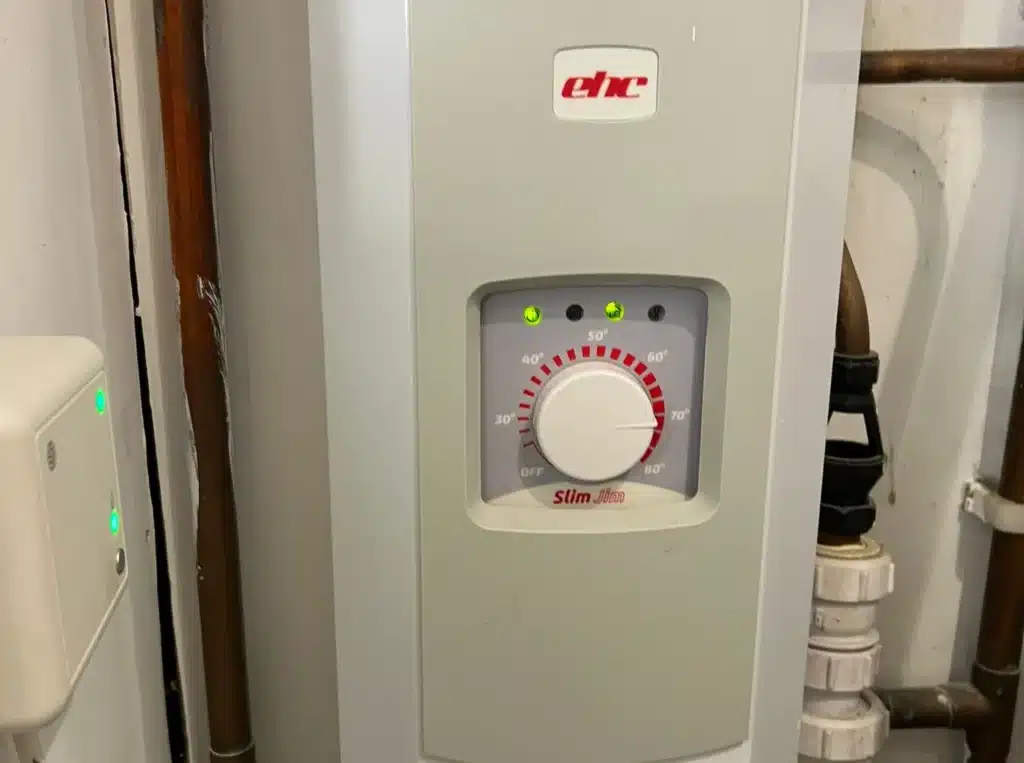
What Temperature Should A Water Heater Be? Things You Should Know
Water heater temperature matters more than most people realise.
Water that’s too hot scorches skin in seconds, while water that’s too cold becomes a breeding ground for harmful bacteria like Legionella. Both risks you don’t want lurking in your home’s plumbing. Yet hot water remains a daily essential, so getting the temperature just right is necessary.
So, what temperature should a water heater be? Most experts and the U.S. Department of Energy recommend 120°F (49°C) as the sweet spot. It’s hot enough to meet household needs and kill most pathogens, yet cool enough to prevent scalding and reduce energy costs.
A water heater dialled in at the right setting works efficiently and safely. Set it wrong, and you’re looking at higher utility bills, potential health hazards, or a painfully cold shower. Understanding the ideal setting before you touch that dial makes all the difference.
In this guide, we’ll cover the correct water heater temperature, how to adjust it properly, the risks of wrong settings, and key maintenance tips to keep your unit running at its best. Let’s dive in.
How does a Water Heater Work?
Whether it’s a storage or tankless water heater, it runs on gas fuel or electricity, the purpose and core functions are the same.
Here’s how a water heater works:
🡆 Dip Tube: Brings cold water into the tank, directing it to the bottom for heating.
🡆 Water Heating Process: It’s time to heat the water inside.
- Electric water heaters use two heating elements located at the top and bottom of the tank.
- Gas water heaters burn fuel beneath the tank, with fumes vented through a chimney pipe.
🡆 Thermostat Control: It monitors water temperature and turns off the heating elements or burner once the set temperature is reached.
🡆 Hot Water Delivery: A pipe at the top of the tank sends hot water to your taps and faucets whenever needed.
Water Heater’s Maintenance Components:
- The Temperature and Pressure Relief (TPR) Valve: This releases excess heat & pressure to prevent explosions.
- The Anode Rod: It prevents further tank rust and corrosion.
What Temperature Should a Water Heater Be and Why?
As mentioned earlier, the recommended temperature setting for a water heater is 120°F (49°C). However, there’s another argument that says the temperature should be 140°F(60°C) to eliminate Legionella bacteria.
Now you may wonder which is the ideal setting? No, we’re not confusing you. We’re here to solve this dilemma.
Why 120°F is The Ideal & Safe Temperature for a Water Heater?
So, here is the thing. 120°F is the only ideal and most recommended temperature for a storage tank or tankless heater. Navigate why:
- Safety Issue: Water heated to 140°F can cause third-degree burns in approximately 3 to 5 seconds. By the time you realize it’s too hot or try to move away, your skin could already be severely burned. Would you risk scalding or set your heater at 120°F for safe usage? Maybe you’ve already decided.
- Energy Efficiency: High heat drains more electric power or gas, resulting in higher heating costs by the end of the year. A 120°F water heater temperature will save you a handsome amount more than 140°F, certainly.
- Accelerated lifespan: Consistent higher temperatures, like 140°F, can cause mineral buildup and affect the lifespan of a water heater. 120°F temperature helps boost the water heater’s lifespan.
When Should You Consider High Temperature for Water Heaters?
Typically, switching to 140°F isn’t a good idea and may lead to frequent water heater repairs. But some situations might demand a higher temperature setting in a water heater:
- Legionella Bacteria Prevention: If you suspect legionella risks in water or you have elderly members with weak immune systems, switch to 140°F.
- Dishwashers Without Boosters: If the dishwasher doesn’t heat its water, you need a high water heater temperature to sanitise dishes properly.
How to Combine Water Heater Temperatures?
Though setting the water heaters’ temperature to 120°F is ideal, you can also get the advantage of both temperatures(120°F & 140°F) tactically. Install a mixing valve (tempering valve). The valve is attached to the heater’s water exit point.
So, here’s a quick scoop of how it combines:
- First, cold water enters the heater, heats up to 140°F, and kills bacteria.
- Then, the 140°F water heads towards the exit point where the tempering valve mixes cold water to decrease the temperature to 120°F.
- Finally, the germless, safe 120°F warm water goes out to taps without the risk of bacteria or scalding.
How to Adjust Your Water Heater?
Knowing the ideal temperature is of no use unless it’s adjusted in the water heater. Let’s delve into the temperature adjustment process:
Step-1: Turn off the power
Safety comes first. Switch off the circuit breaker (electric water heater) or turn off the gas valve knob (gas heater).
Step-2: Access the Thermostat
For electric heaters, remove the top and bottom panels with a screwdriver and take out the insulation. For gas models, find the control dial in front of the valve.
Step-3: Adjust the Temperature
In gas water heaters, you can directly turn the dial to your desired setting. For electric ones, use a flathead screwdriver to turn the slot on the thermostat’s dial to set the temperature.
Step-4: Restore the Power
For electric water heaters, replace the panels and insulation before restoring the electric power. Once that’s done, turn the circuit breaker on. In gas-fueled water heaters, turn the gas valve on.
It will take 1-3 hours for the gas water heaters to heat up and 24 hours for the electric ones. Though theoretically it seems easy, we recommend hiring professional electricians or heating engineers to adjust the settings.
Major Risks of Setting the Wrong Temperature in a Water Heater
An incorrect temperature can increase the risk of bacterial growth, burns, or even an explosion. As the ideal water heater temperature is 120°F, temperatures set higher or lower than this can lead to major risks.
Risks of High Temperature(Above 120°F):
- Severe Scalding: 140°F hot water from the water heater can burn skin within 5 seconds and cause third-degree burns, in which all layers of the skin are destroyed.
- Energy Wastage: High temperature causes faster heat loss from the tank and pipes. So a higher energy bill is going to say, ‘hi’.
- Mineral Buildup: Excessive hot water increases the rate of scale deposition inside the tank and pipes. This may end up requiring a water heater replacement.
- Pipe Joint Damage: High heat can stress plumbing joints.
Risks of Setting Low Temperature (Below 120°F):
- Risk of Legionella Growth: Lower temperature allows bacteria like Legionella(which causes Legionnaires’ disease) to grow. If the water stays at a lower temperature for longer, they multiply efficiently.
- Unpleasant Showers and Cleaning: Lukewarm water struggles to cut through grease, soap scum, and grime, reducing cleaning effectiveness in sinks, dishwashers, and washing machines.
Water Heater Maintenance Tips: Maximise Efficiency and Longevity
Even appliances demand care. Maintenance makes their lifespan longer and keeps them highly efficient. Here’s the maintenance tactics for water heaters:
- Flush the tank annually to remove mineral deposits.
- Check the anode rod every 2-3 years. If more than 6 inches of the core wire is exposed or it is heavily coated in calcium, replace it.
- Test the temperature and pressure relief valve annually. Check if it discharges water and closes properly.
- Wrap older tanks with an insulation blanket and hot water pipes with foam insulation.
- Inspect the base of the tank regularly to check for moisture, mineral buildup, rust, etc.
In Summary
Water heaters are mandatory parts of households and even industrial properties. Without the perfect temperature of water, everything will get messy. Hot water is required for a bunch of chores, and you need that perfectly tempered.
Not too hot, not too cold. Remember “what should temperature a water heater be” and set it accordingly. Keep the dial at 120°F(49°C) and keep it consistent.
The temperature of hot water in daily use is like salt in savoury foods. It has to be precise and perfect. Otherwise, it’s of no use. Set it correctly on the control dial and leave the water heater to do its job.
Your Most Asked Questions On Water Heater Temperatures
1. What is the Ideal Water Heater Temperature?
120°F or 49°C is considered the ideal temperature for a water heater. This is the highly recommended temperature.
2. What is the Risk of Scalding?
The risk of scalding depends on the hot liquid’s temperature and duration of exposure. However, scalding can cause severe scarring, heat exhaustion, bacterial infection, and even be fatal (in severe cases).
3. What happens if the water heater is too hot?
If the water heater is hotter than usual, it may cause severe hazards like scalding, damage to pipes, leaks in the water tank, and dangerous mineral release and buildup.
4. When to worry about a hot water heater?
A hot water heater raises concerns when it starts leaking, makes unusual noises, stops heating up, or shows rust.
5. How many years do water heaters usually last?
Traditional electric water heaters with a tank last about 10-15 years, while traditional gas water heaters with a tank last 8-12 years. Tankless water heaters last about 15 to 20 years.
6. What shortens a water heater’s lifespan?
Limescale buildup, high water pressure, and internal tank corrosion are the culprits behind shortening a water heater’s lifespan.
7. Does a Higher Temp Mean More Cost?
Certainly. Keeping your water heater at a high temperature bumps up the energy costs.
What Temperature Should A Water Heater Be? Things You Should Know Read More »